
P5X | Persona5: The Phantom X
SEGA CORPORATIONRole Playing
4.32.17K Reviews
- Version
- 4.5.0
- Installs
- 1.00M
- Age Rating
- Mature 17+
Screenshots
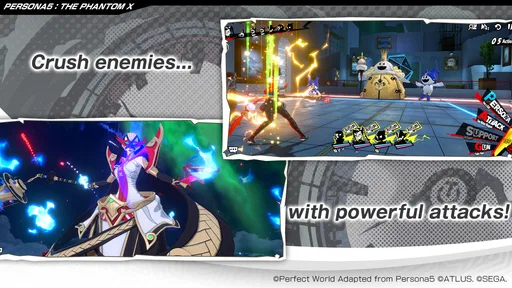
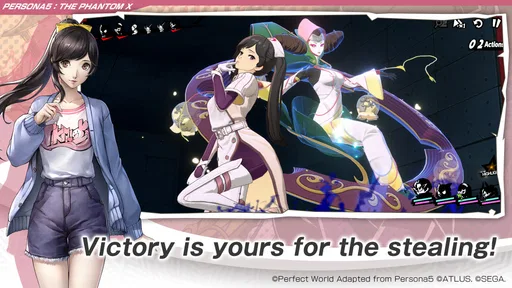

Our Review of P5X | Persona5: The Phantom X
 Analysis by Appyee
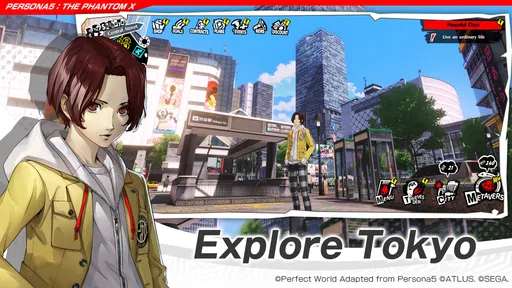
Persona5: The Phantom X is the kind of mobile role-playing game I approach with two expectations at once: I want the stylish atmosphere associated with Persona 5, but I also want to know whether a phone can handle a large, visually ambitious adventure without turning every session into a chore. After spending time with it, my impression is that this is much more than a quick spin-off built around familiar artwork. It aims to deliver a full anime RPG experience, with a second life fantasy that asks you to move between ordinary routines and a more dramatic world.
P5X is free to start, developed by SEGA CORPORATION, and listed for Android devices running version 5.1 or later. It sits in the role-playing category and carries a Mature 17+ rating, so I would not treat it as a casual all-ages game. The store audience is already substantial: it has passed one million installs, with a 4.3 average from roughly fifteen thousand ratings and about two thousand two hundred written reviews. Those figures do not replace personal experience, but they do suggest that the game has found a real audience beyond Persona collectors.
How the game feels during ordinary play
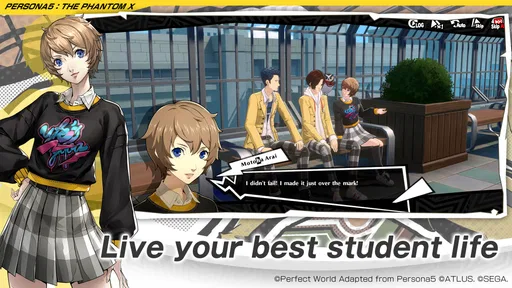
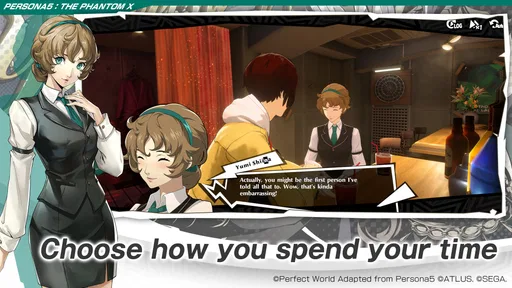
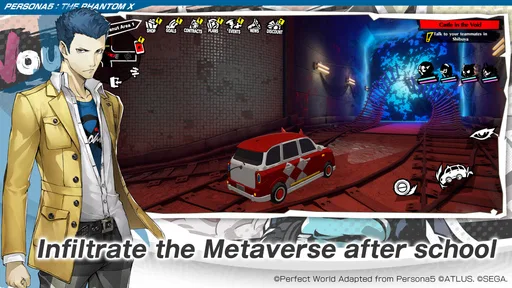
The most important thing to understand is that P5X is designed around contrast. One moment is devoted to the everyday side of its story, and the next shifts toward supernatural role-playing adventure. That dual structure gives the game a different rhythm from a straightforward dungeon crawler. I found myself paying attention not only to battles, but also to how the game builds a sense of routine before asking me to step into something more intense.
That pacing can make the game feel slower than a compact action title, especially when I wanted to get directly to combat. However, it also gives the story room to establish mood and character relationships. If you enjoy the social and dramatic side of Persona games, this slower opening rhythm is part of the appeal rather than wasted time. If you mainly want rapid battles with minimal dialogue, the same structure may test your patience.
The presentation does a lot of the early work. The anime-inspired look is immediately recognizable, and the game feels most convincing when its visual identity, music, menus, and story tone are working together. I would not describe it as a plain mobile RPG with a Persona skin. Its strongest moments come from the feeling that the interface and presentation belong to the same universe.
In everyday use, the game is best approached in planned sessions. I would not open it expecting a five-minute distraction every time, because story scenes and progression naturally encourage longer attention. A realistic routine would be playing after work or school, completing a manageable portion of the current activity, and stopping before the session becomes tiring. That approach also makes it easier to notice the story details instead of rushing through them.
Speed expectations before you commit
Perceived speed depends heavily on what I am doing. Moving through menus and starting ordinary interactions feels different from entering a visually busier battle or a more demanding story sequence. The game generally gives the impression of a substantial production rather than a lightweight puzzle that opens instantly and disappears from memory.
That distinction matters when choosing a device. A newer phone with comfortable storage and enough free space should be a more sensible home for this game than an older budget handset already struggling with several large apps. The minimum operating-system requirement is Android 5.1, but meeting a software requirement does not automatically mean every device will deliver the same smooth experience. Age, available memory, background activity, and thermal condition can all affect how comfortable a long session feels.
I also recommend launching it when the phone is not busy with downloads, video playback, or many background processes. This is not a special trick for Persona games; it is simply a practical way to reduce avoidable friction in a visually demanding RPG. Closing unnecessary apps before a longer session can help the phone devote more attention to the game, while keeping the device cool can make extended play feel less tiring.
The useful performance question is not only “will it run?” but “will it remain comfortable during a long story-and-battle session?” That is where the difference between a technically compatible phone and a genuinely suitable one becomes noticeable.
What happens during heavier sessions
The demanding moments are likely to be the parts where several kinds of work come together: animated presentation, story content, transitions, and battles that require more attention than simply tapping through a menu. I noticed that these are the situations in which a phone’s limitations matter most. A device can appear perfectly fine during short checks and still become less pleasant after repeated play.
For that reason, I would test the game in the way I intend to use it. Do not judge it only by opening the title screen. Play long enough to move through story content, enter combat, return to menus, and continue for a while. That small trial tells me more than a quick launch because it reveals whether the phone remains responsive and whether heat or battery anxiety changes the experience.
Heavy use also changes how I think about the game’s free-to-play structure. P5X costs nothing to download, but it includes purchases ranging from $0.99 to $82.99 per item. I would treat that range as a reason to decide on a personal spending limit before becoming invested in the story and characters. The game is easier to enjoy when I am making deliberate choices rather than reacting to excitement after a difficult encounter or an appealing character moment.
This is one of the less obvious trade-offs of a long-form mobile RPG. The emotional investment that makes the story engaging can also make optional spending feel more tempting. I prefer to separate those two decisions: first decide whether the core play experience suits me, then decide whether any purchase is worth it. That approach is especially sensible for younger players, although the Mature 17+ rating already signals that this is not aimed at children.
Another practical tip is to avoid starting a major session when I know I will need the phone immediately afterward. Story-heavy games are easier to enjoy when I can finish a scene or stop at a natural point. Interrupting repeatedly may not damage the game itself, but it can make the whole experience feel fragmented and slower than it really is.
Reliability, recovery, and the shape of a good session
Reliability is not just about whether an app crashes. For me, it also includes how easy it is to return after closing the game, how clearly the game communicates progress, and whether a short interruption ruins the rhythm. P5X is more enjoyable when I treat it as a serious RPG rather than a disposable app that I can abandon and reopen without thinking.
I build recovery into my routine by ending sessions at a sensible point instead of closing the game in the middle of an important transition. I also avoid switching between many demanding apps while playing. These habits do not guarantee perfect behavior on every phone, but they reduce the number of situations in which a mobile game has to recover from a stressed device or interrupted session.
If the game needs to be closed unexpectedly, I would reopen it patiently rather than repeatedly tapping the screen or immediately assuming that progress has been lost. Mobile applications can take longer to resume after a demanding session, especially when the operating system has been managing memory aggressively. The safest everyday habit is to let the game finish loading before interacting with it again.
I would also keep the app updated when a new version is available. The current version is 4.5.0, and staying current is generally the sensible way to receive the developer’s ongoing fixes or adjustments. I would not promise that an update solves every performance issue, but using an old build can make troubleshooting harder because the problem may already have been addressed in a later release.
My main reliability concern is less about the game’s concept and more about the range of phones that may attempt to run it. A large audience includes many different devices, and the same title can feel polished on one phone while feeling demanding on another. That is why I would judge the experience after a sustained test rather than relying only on the install process or the first menu.
Device constraints that should shape your choice
The Android requirement of 5.1 makes the game broadly accessible at the operating-system level, but I would not confuse broad compatibility with universal comfort. A phone can technically support the required software and still be a poor match if it has limited free storage, weak thermal management, or very little room for the game alongside other apps.
Storage planning is particularly important for a game that presents itself as a substantial anime RPG. Even without assigning an unverified size to the installation, I would leave comfortable free space rather than trying to install it with only a narrow margin. Keeping some room available also makes the phone easier to use for photos, messages, updates, and other everyday tasks.
Battery behavior is another practical consideration. Long sessions involving animated scenes and battles are more demanding than reading a short article or playing a simple card game. I would begin with a reasonable charge, avoid playing in direct heat, and use a stable connection when downloading or updating content. If battery life is already a daily problem on your phone, this may not be the best game to make your main mobile hobby.
Screen size affects the experience too. A larger display makes the visual presentation and text easier to appreciate, while a small screen can make extended reading and menu navigation feel cramped. This is not a reason to reject the game automatically, but it is a genuine trade-off. Someone who mainly plays on a compact phone may prefer shorter sessions, whereas a larger-screen device makes the role-playing structure more comfortable.
I would skip P5X if I wanted a game that works equally well offline, demands almost no storage planning, or can be completed in tiny fragments. I would also hesitate if I dislike reading story scenes, managing a growing RPG routine, or setting boundaries around in-app purchases. A simpler turn-based game may be a better fit for those needs, while a console Persona title may be preferable for someone seeking a more self-contained experience without the particular pressures of a free mobile release.
Who gets the most from the Persona 5 universe
The obvious audience is Persona 5 fans who want another way to spend time in that style of world. Yet I think the game can also appeal to players who are new to the series and enjoy character-focused anime role-playing games. The important condition is patience. Newcomers should be willing to learn the setting and systems rather than expecting every reference or tone shift to make immediate sense.
For an existing fan, the attraction is not simply recognition. The appeal comes from seeing how this mobile adventure creates its own reason to exist while retaining the familiar blend of ordinary life and supernatural drama. That balance gives returning players something to investigate, rather than offering only a collection of familiar names.
For a player choosing between this and a conventional mobile RPG, the decision depends on priorities. Many alternatives focus on quick progression, repeated battles, or simplified daily tasks. P5X is a stronger choice if atmosphere, narrative, and the feeling of living through two connected sides of a character’s life matter to you. A more traditional alternative may be better if you want immediate action, fewer interruptions, or less story between encounters.
I also think it suits players who like making a game part of a routine. A short visit can maintain momentum, while a longer session lets the story breathe. The downside is that routine can become obligation if I start treating every available activity as something I must complete. My advice is to play for the parts I actually enjoy, not to turn the game into another task list.
Small decisions that improve the experience
My first recommendation is to separate performance testing from emotional investment. Install the game, try it on the device you will really use, and play through more than the opening moments. If the phone becomes uncomfortable during a normal session, it is better to recognize that early than after spending time or money.
Second, decide how you want to handle purchases before the story has made you attached to its cast. The free entry point is useful because it lets you evaluate the game, but the available purchase range means personal limits are worth setting in advance. I would never use spending to compensate for a device that feels slow or a play style that I do not actually enjoy.
Third, use natural stopping points. This makes recovery easier, protects the story’s pacing, and reduces the temptation to rush through scenes simply because I started playing at an inconvenient time. It also helps answer a practical question many new players have: yes, the game can fit into a busy day, but it works best when those shorter sessions are intentional rather than constantly interrupted.
Finally, give the presentation enough attention before deciding whether the game is for you. The visual style is not decoration placed around a generic system; it is a major part of why the experience feels like a Persona-inspired adventure. If that tone does not connect with you, deeper progression will probably not change your opinion. If it does connect, the slower story sections become much easier to appreciate.
My performance and overall verdict
After weighing the speed expectations, heavier moments, recovery habits, and device limits, I see P5X as a demanding but appealing choice for the right player. Its strongest quality is the way it combines a recognizable Persona-like identity with a mobile role-playing structure that encourages regular return visits. Its biggest friction points are the commitment required by a story-led RPG, the need for a suitable phone, and the presence of optional purchases that deserve self-control.
The game is free, but I would not describe it as effortless. It asks for time, attention, storage planning, and a device that can remain comfortable during longer sessions. That is not a criticism by itself; it is simply the honest shape of the product. Players who want a rich anime RPG and already enjoy the Persona 5 atmosphere may find that trade worthwhile.
My recommendation is strongest for fans who want a new adventure connected to that universe and for patient newcomers who value story as much as combat. I would steer away from it if your priority is instant loading, tiny sessions, minimal resource use, or a completely self-contained premium-style experience. In those cases, a lighter role-playing game will probably fit your day better.
For me, P5X succeeds when I give it the conditions it needs: a capable and reasonably cool phone, enough free space, a stable session, and a clear spending boundary. Under those circumstances, it feels like a substantial mobile RPG rather than a rushed companion app. The final verdict is positive, but qualified: this is a game to settle into, not one to squeeze carelessly into every spare minute.
Verdict
Strengths of P5X | Persona5: The Phantom X
- Faithful Persona 5 atmosphere with stylish visuals and music.
- Turn-based combat rewards planning, weaknesses, and team synergy.
- Large story campaign with memorable characters and social interactions.
- Regular events and new content provide reasons to keep playing.
- Exploration and daily activities add variety beyond battles.
Limitations of P5X | Persona5: The Phantom X
- Gacha mechanics can make collecting stronger characters expensive.
- Progress may slow noticeably without consistent daily play.
- The game requires substantial storage space and frequent downloads.
- Some missions and upgrades involve repetitive grinding.
- Online features and updates require a stable internet connection.
Other Releases by SEGA CORPORATION
View All


Similar Picks in This Category
View All
Hair Dye
CrazyLabs LTD4.4

Monster High™ Beauty Salon
CrazyLabs LTD4.5

Bus Simulator - Bus Games 3D
Jima Apps4.4

Flight Pilot: 3D Simulator
Wildlife Studios4.1


Super Stylist Fashion Makeover
CrazyLabs LTD4.4
Frequently Asked Questions
What is P5X | Persona5: The Phantom X?
P5X | Persona5: The Phantom X is a free-to-play mobile role-playing game set in the Persona 5 universe. It combines turn-based battles, social activities, dungeon exploration, character development, and a modern Tokyo setting. Although it features familiar themes and gameplay ideas from Persona 5, it introduces a new protagonist, original characters, and a separate storyline designed for mobile players.
Can I play P5X offline?
No. P5X requires a stable internet connection because it is built as an online service with account synchronization, downloadable content, live events, updates, and server-based progression. You may be able to play using Wi-Fi or mobile data, but a weak connection can cause loading problems, disconnections, or delays during battles and story scenes. Downloading additional files may also require considerable storage and data.
Is P5X free to download and play?
P5X is generally free to download, but it includes optional in-app purchases. Its gacha system allows players to obtain characters, weapons, or other resources through in-game draws, while stamina and upgrade materials can affect the pace of progression. You can experience the story and develop a strong team without spending money, although paid currency may speed up recruitment and progression.
Does P5X require a powerful phone or tablet?
P5X is a visually detailed 3D game and may require more performance than a simple mobile RPG. A recent Android or iOS device with sufficient memory, free storage, and an updated operating system will provide a smoother experience. Older or lower-end devices may suffer from longer loading times, frame-rate drops, overheating, or crashes, so checking the store requirements before installing is recommended.
Does P5X include characters and gameplay from Persona 5?
Yes, P5X includes recognizable Persona 5 elements such as turn-based combat, Personas, stylish menus, social interactions, daily activities, and familiar locations or characters. However, it is not simply a mobile version of the original game. The experience focuses on new protagonists and story content, while returning characters and references are integrated into a broader free-to-play structure with live-service events and ongoing updates.
Play our best games!


